Batiklopedia
Have You Ever Heard of “Batik Indonesia” Initiated by President Sukarno?
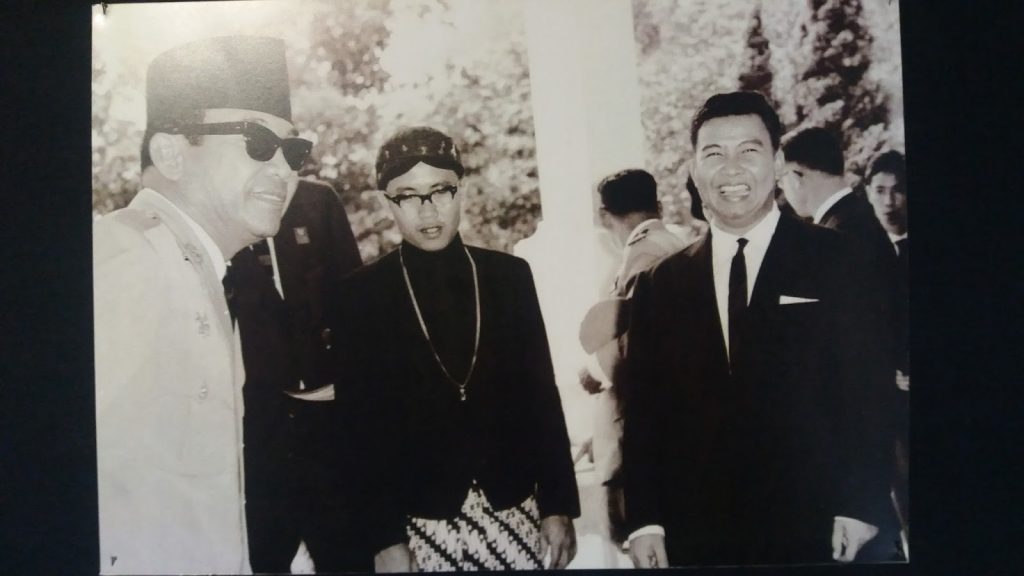
Yes, the goal was for batik not to survive and struggle alone within its own regions, but to emerge as a national attire that represents the identity of batik itself. It was Go Tik Swan who realized the vision of Indonesian’s first President.
Living in an environment surrounded by batik artisans ingrained a deep, lasting love for batik within him. And it was from him that the Batik Indonesia motif was born—at the request of President Sukarno, who did not want to see batik fade into obscurity.
Born into a Batik-Making Family
Go Tik Swan, also known as Tik Swan or K.R.T. Hardjonagoro, was born on May 11, 1931. He was the eldest son in a Chinese-Indonesian family from Solo (Surakarta). Tik Swan was raised by his grandfather, as his parents were busy running their business.
His grandfather owned four batik workshops in and around Solo. His exposure to the batik world began at a very young age.
In addition to being surrounded by batik artisans, Tik Swan also developed a deep love for Javanese culture and tradition, which he embraced more strongly than his Chinese heritage. It all began when he listened to stories about Dewi Sri and other traditional Javanese folklore. Eventually, he immersed himself in Javanese literature, puppetry (wayang), poetry (macapat), gamelan music, the Javanese script (Hanacaraka), and dance.
His understanding of Javanese culture was also influenced by Prince Hamidjojo, son of Pakubuwono X, an indologist who studied at Leiden University and a classical Javanese dancer. Tik Swan was taught Javanese dance and music (karawitan) under his guidance.
Tik Swan attended the Neutrale Europesche Lagere School, where he studied alongside the children of Dutch officials and local elites. He later enrolled in MULO and VHO (Voorgezet Hooger Onderwijs) in Semarang.
Against his father’s wishes, Tik Swan pursued his passion for culture by enrolling at the Faculty of Literature at the University of Indonesia (UI), majoring in Javanese Literature.
During his time at UI, Tik Swan connected with Professor Poerbatjaraka to study traditional Javanese dance. Eventually, his dance group was invited to perform at the Presidential Palace for UI’s anniversary celebration, where President Sukarno witnessed Tik Swan’s performance and was deeply impressed.
That marked Tik Swan’s first introduction to President Sukarno.
Challenged by President Sukarno
Upon discovering that Tik Swan (Hardjonagoro) came from a long line of batik makers, President Sukarno personally challenged him to create “Batik Indonesia.” Tik Swan took the challenge seriously.
He began researching the batik heritage of his hometown—delving into its history and philosophy.
His search led him to the mother of Susuhunan Pakubuwono XII, who granted him access to ancient royal batik motifs previously unknown to the public. Drawing inspiration from these, Tik Swan developed new motifs by adapting the old designs without compromising their symbolic meaning. He also introduced brighter colors influenced by Pekalongan batik, while preserving the classic Solo-Yogyakarta style motifs.
From this research, Batik Indonesia was born. His innovation sparked a batik renaissance in the 1960s and 1970s.
Throughout his lifetime, Tik Swan created over 200 Batik Indonesia motifs, and in 2005, in recognition of his deep devotion to Javanese culture, he was honored with the title Panembahan Hardjonagoro by Sri Sultan Pakubuwono.
Tik Swan passed away on November 5, 2008, at the age of 77.